The Weekly Cleaning Schedule for Busy People (15–30 Minutes a Day)
A realistic weekly cleaning schedule for busy people — daily habits, one focus area per day, and monthly tasks so your home stays clean without a weekend marathon.
This post may contain affiliate links. If you buy through them we may earn a small commission at no extra cost to you. Learn more.
In this post
If your weekends disappear into a four-hour cleaning marathon — or the cleaning simply never happens — the problem usually isn't motivation. It's the plan. Trying to clean the whole house at once is exhausting, and it's easy to put off.

A weekly cleaning schedule flips that around. Instead of cleaning everything once, you clean one area each day for a short, fixed amount of time, and you add a handful of tiny daily habits that stop mess from building up. The result: a home that stays "guest-ready enough" most of the time, and weekends that are actually yours.
Below is a simple schedule you can copy, plus tips for adapting it to a small apartment, a family home, or a week that goes sideways.
Why a Weekly Cleaning Schedule Works
- Smaller tasks are easier to start. "Clean the bathroom for 20 minutes" is far less daunting than "clean the house."
- Nothing gets ignored for months. Every area gets attention on a predictable rotation.
- It's easy to share. A written schedule makes it obvious who does what, which cuts down on arguments in shared homes.
- Missed days don't ruin it. If you skip Tuesday, you simply pick up Wednesday's task. Next week, Tuesday comes round again.
The Daily Habits (10–15 Minutes Total)
These small habits do most of the heavy lifting. They take minutes each, but they're what keep the weekly tasks quick.
- Make the bed. It takes a couple of minutes and makes the whole bedroom look tidier.
- Clear and wipe the kitchen counters after dinner.
- Deal with dishes daily — run the dishwasher or wash up before bed, and empty it in the morning.
- Do a 10-minute reset in the evening: return items to their homes, fluff cushions, put shoes away.
- Sort mail as it arrives. Recycle junk immediately; put action items in one tray.
- Do a quick bathroom wipe of the sink and faucet with a cloth after your morning routine.
- Start one load of laundry if the hamper is full — small, frequent loads beat a mountain on Sunday.
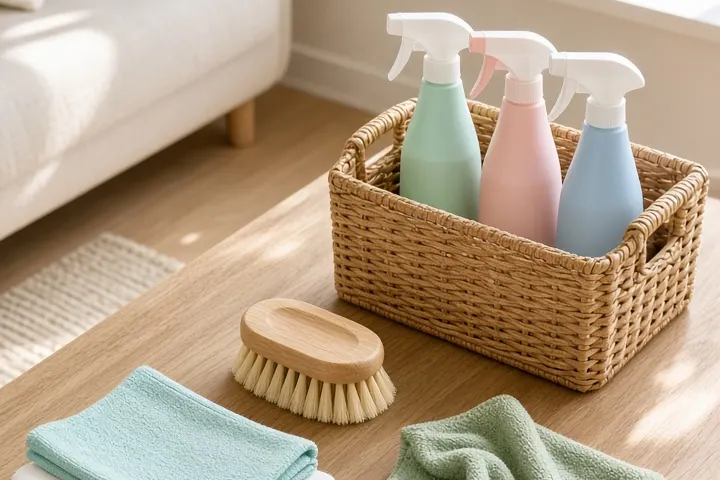
Color-code them: one color for kitchen, another for bathroom
Check price on AmazonThe Weekly Cleaning Schedule (One Focus Per Day)
Set a timer for 20–30 minutes and work on that day's area only. When the timer goes off, stop — even if it isn't perfect.
| Day | Focus Area | Key Tasks |
|---|---|---|
| Monday | Kitchen | Wipe appliance fronts, clean the microwave, wipe cabinet fronts, clear out old food from the fridge, mop the floor |
| Tuesday | Bathrooms | Clean toilet, sink, and mirror; scrub shower or tub; wash bath mats; empty bins |
| Wednesday | Dusting | Dust surfaces, shelves, electronics, skirting boards, light switches, and door handles |
| Thursday | Floors | Vacuum all rooms, including under cushions; mop hard floors |
| Friday | Bedrooms & Laundry | Change bed sheets, wash towels, tidy nightstands and dressers |
| Saturday | Catch-up / Errands | Finish anything skipped, plus a quick declutter of one drawer or shelf |
| Sunday | Rest & Plan | Meal plan, check next week's calendar, rest |
Monday: Kitchen
Start the week with the room that gets used most. Begin at the top and work down so crumbs land on surfaces you haven't cleaned yet: cabinet tops and range hood first, then counters and appliance fronts, then the floor. A quick fridge sweep — removing leftovers that are past their best — makes Monday a natural time to plan meals and groceries.
Tuesday: Bathrooms
Spray the toilet, shower, and sink with your cleaner first and let it sit for the time recommended on the label while you clean the mirror. Dwell time does a lot of the scrubbing for you. Always follow product directions and ventilate the room — open a window or turn on the fan.
Important: never mix bleach with ammonia-based cleaners or with acids such as vinegar. These combinations can create dangerous fumes. Use one product, rinse, then use the next if needed.
Saves your back and reaches the top of the tiles
Check price on AmazonWednesday: Dusting
Work top to bottom, room by room: ceiling fan blades, shelves, picture frames, TV stand, then skirting boards. A slightly damp microfiber cloth traps dust rather than spreading it into the air. Don't forget high-touch spots like light switches, remotes, and door handles.
Thursday: Floors
Since you dusted yesterday, any dust that fell is now on the floor — perfect timing. Vacuum first, then mop hard floors. Move lightweight furniture occasionally to get under it.
A lightweight cordless model makes a quick daily or weekly pass much easier
Check price on AmazonFriday: Bedrooms and Laundry
Fresh sheets on a Friday make the weekend feel like a reset. While the sheets wash, tidy surfaces and put away clothes. Many people change sheets weekly or every two weeks — choose what suits your household and stick with it.
Saturday: Catch-Up
Life happens. Saturday is the buffer day for anything you skipped, plus one small decluttering task: a single drawer, the shoe rack, or the bathroom cabinet.
Sunday: Rest and Plan
Resting is part of the system. Take 10 minutes to look at the week ahead, plan meals, and decide if any day needs a lighter task because of a busy schedule.
Monthly Cleaning Tasks
Rotate one of these into a weekly slot each week, so you're never doing them all at once:
- Wipe inside the fridge and freezer drawers
- Clean the oven or wipe the inside of the microwave thoroughly
- Wash shower curtains and liners (check the care label)
- Vacuum upholstery and under beds
- Wipe window sills, door frames, and blinds
- Clean the washing machine according to the manufacturer's instructions
- Clean or replace the range hood filter as recommended for your model
- Dust air vents and wipe light fixtures
Seasonal Tasks (A Few Times a Year)
- Wash windows inside and out
- Deep clean carpets or rugs
- Flip or rotate the mattress if the manufacturer recommends it
- Declutter wardrobes for the season
- Wash pillows and duvets according to their care labels
- Clean behind and under large appliances
How to Adapt This Schedule
For a small apartment
Combine days. For example: Monday kitchen + bathroom, Wednesday dust + floors, Friday bedroom + laundry. Three short sessions a week may be all you need.
For families with kids
Give everyone a "zone" that matches their age. Younger children can put toys in labelled bins or match socks; older kids can vacuum their rooms or empty the dishwasher. A visible chart on the fridge helps everyone know what's expected.
For people who work long hours
Keep only the daily habits on weekdays and move the focus tasks to two longer sessions on your days off. Something consistent beats something ambitious that you abandon.
For homes with pets
Add a quick vacuum of high-traffic areas mid-week and wash pet bedding on a regular rotation.
Build a Simple Cleaning Caddy
A portable caddy means you don't waste time collecting supplies from around the house. A basic kit:
- An all-purpose cleaner suitable for your surfaces
- A glass cleaner
- A toilet brush (one per bathroom, stored by the toilet)
- Several microfiber cloths
- A scrub brush and a non-scratch sponge
- Rubber gloves
- A small bin bag for collecting rubbish as you go
A divided caddy keeps bottles upright as you move room to room
Check price on AmazonTips to Stay Consistent
- Pair cleaning with something you enjoy. A podcast or playlist makes 20 minutes go quickly.
- Use a timer. Knowing there's an end point makes it easier to start.
- Lower the bar. "Done" is better than "perfect." A quick wipe today beats a deep clean you never get to.
- Track it. Ticking boxes on a checklist is surprisingly motivating.
Frequently Asked Questions
How long should a weekly cleaning schedule take?
With daily habits (about 10–15 minutes) and one focus area per day (about 20–30 minutes), most homes can be maintained in under an hour a day — often much less for smaller spaces.
What should be cleaned every day?
Dishes, kitchen counters, a quick tidy of living areas, and anything that gets wet or sticky daily, like the bathroom sink.
What is the best day to clean the bathroom?
Any day that suits your routine. Many people prefer early in the week so the bathroom is fresh by the weekend, but consistency matters more than the specific day.
How do I make a cleaning schedule I'll actually stick to?
Start smaller than you think you need, attach tasks to existing routines (like after dinner), and give yourself a built-in catch-up day.
How often should bed sheets be changed?
Many people change them weekly or every two weeks. Follow the care labels on your bedding and adjust for things like pets in the bed or hot weather.
The Bottom Line
A good weekly cleaning schedule isn't about cleaning more — it's about cleaning in smaller, predictable pieces. Copy the table above, tweak the days to fit your life, and give it two weeks. Most people find their home stays tidier with less total effort than the old weekend marathon.
Pin this schedule to your Cleaning Routines board so it's handy when you plan your week.
Pin it for later
Save one of these to your Pinterest board so you can find it again.